nextcaresupply.com

Your Care. Our Supply. — Trusted Medical Equipment for Home & Clinical Care
Loading date…
--:--
Loading weather…
5742 Lankershim Blvd, North Hollywood, CA 91601
747-476-9729 (Call & Text)
Home & Clinical Mobility

Electric Power Wheelchairs

Motorized mobility built for independence, control, and everyday comfort.

View Products

Electric Power Wheelchairs

Motorized wheelchairs — also called power wheelchairs or electric wheelchairs — are battery-powered chairs built on wheels, made up of a motor, battery, seat, control device, and wheelset. They're designed to give patients with limited mobility the freedom to get where they need to go without relying on someone else to push them.

Power wheelchairs come in a range of types built for different needs and budgets. Nextcare Supply carries several kinds, including standard chairs, heavy-duty models, pediatric electric wheelchairs, and power lift chairs. Scroll down for more on the different types available and what to consider before buying.

01
Cost-Effective Vive Health Vive Health Power Wheelchair
  • Repositionable joystick controller
  • Lightweight and foldable
  • Solid, flat-free front tires
Vive Health Power Wheelchair
02
Highly Reviewed Robooter Robooter E60-A All-Terrain Power Wheelchair
  • High-capacity battery
  • Independent front suspension
  • Folds easily in two steps
Robooter E60-A All-Terrain Power Wheelchair
03
Best in Class Pride Mobility Jazzy 614 HD Power Wheelchair
  • Available in Candy Apple Red or Viper Blue
  • Bariatric design, rated up to 450 lbs
  • Built with high wheel clearance
Jazzy 614 HD Power Wheelchair
Beasy

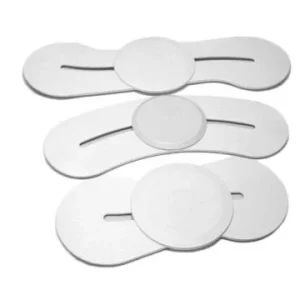
Beasy Board Patient Transfer System – Trans, II and Glyder

$49.95 - $249.00
Pride Mobility

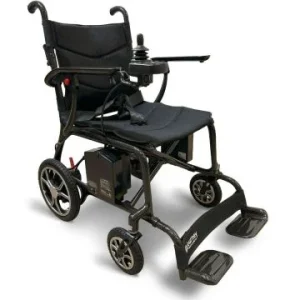
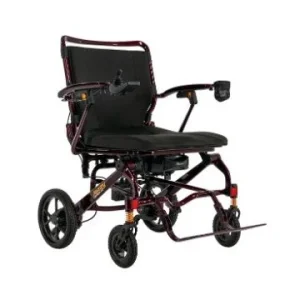
Jazzy Carbon HD Power Chair

$3,499.00
Journey Health and Lifestyle

Journey Air Elite Lightweight Folding Power Chairs

$2,895.00 - $3,145.00
Journey Health and Lifestyle

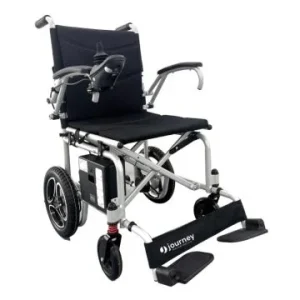
Journey Air Lightweight Folding Power Chair

$2,045.00
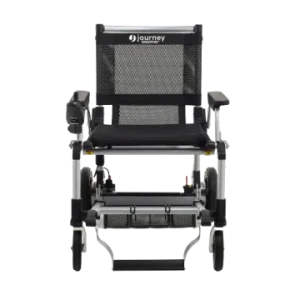
Journey Health and Lifestyle

Journey Zoomer Folding Power Chair, Mobility Wheelchairs

$2,945.00
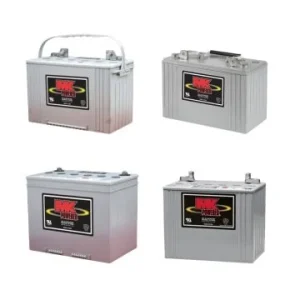
MK Battery

MK Sealed Genuine Gel Batteries

$160.09 - $393.41
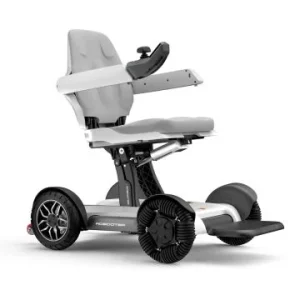
Robooter

Robooter X40 Folding Power Wheelchair

$30.50 - $2,694.00
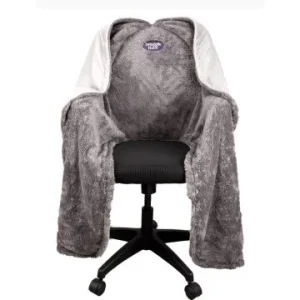
SnuggleBack

SnuggleBack Original Chair Blanket

$55.00 - $64.00

Product Enquiry

Interested in this product? Send us your details and we'll get back to you.

Power wheelchairs are especially useful for people who can't self-propel a standard wheelchair — whether that's due to fatigue over long distances, or needing a chair sturdy enough to carry an oxygen tank. For many users, a power chair means real independence they wouldn't otherwise have.

Power wheelchairs are built differently depending on who's using them — children, adults, or bariatric riders — and vary in power, seat size, drive wheel position, materials, and adjustability.

  • Pediatric/Youth — sized specifically for smaller riders and children.
  • Standard — built to meet the needs of most everyday users.
  • Lightweight/Portable — foldable or easy to disassemble, ideal for car trunks and travel, and typically lighter than standard chairs.
  • Heavy-Duty — stronger frames, more powerful motors and batteries to support bariatric patients.
  • Reclining — helpful for patients managing hip issues, orthostatic hypotension, or pressure ulcer prevention, and can improve circulation.
  • Tilt-in-Space — offers therapeutic positioning for neuromuscular conditions, edema, pressure ulcers, postural hypotension, back pain, and fatigue.
  • Outdoor/Beach — rugged builds with suspension, larger tires, and drive wheel placement suited for rough terrain.
  • Power Assist — lightweight and easy to break down, built for users with some self-mobility; adaptive kits can even convert a standard chair.
  • Elevating — raises the user to standing height, useful for socializing and daily tasks.

Choosing the right power chair means weighing lifestyle, comfort, and everyday performance needs — plus drive-wheel factors for outdoor use or rough terrain.

Chair Selection Factors

  • Seat size, with the right width and depth
  • Swivel seating for easier transfers
  • Swing-away armrests
  • Adjustable armrest height
  • Adjustable seat height
  • Adjustable footplate height
  • Reclining backs
  • Headrests

Key Performance Factors

  • Top speed
  • Maximum distance
  • Turning radius
  • Maximum climbing angle

Drive Wheel Factors

  • Weight distribution
  • Center of gravity
  • Stability
  • Turning radius
  • Handling obstacles
  • Handling slopes
  • Rough-road performance

With so many options on the market, choosing can feel overwhelming — but that range is exactly what lets you match a chair to your specific needs. A few more factors worth weighing:

  • Weight Capacity — match the chair's rated capacity to the patient; bariatric patients need a heavy-duty model.
  • Dimensions — measure doorways and compare against the chair's width to confirm it fits.
  • Drive Wheel Position — front, rear, and mid-drive each come with their own tradeoffs.
  • Battery Range — longer outdoor trips call for greater battery output.
  • Speed — compare top speeds if a faster chair matters to you.
  • Distance — match expected travel distance to what the chair can cover.
  • Turning Radius — tighter spaces call for a tighter turning radius.
  • Portability — weight, disassembly, and folding matter most for frequent travelers.
  • Adjustments — seat, footplate, and controller adjustments affect overall fit and comfort.
  • Adaptations — features like reclining or tilt-in-space can improve fit for specific needs.

Where the drive wheels sit changes how a chair handles. There are three common setups, each with its own tradeoffs.

Front-Drive

Drive wheels sit in front of the seat, offering strong stability on rough or uneven ground and less risk of tipping — though it can fishtail at higher speeds.

Rear-Drive

Drive wheels sit behind the seat, giving better stability at higher speeds, though turning radius increases and steep hills may call for anti-tip accessories.

Mid-Drive

Drive wheels sit beneath the seat for the best center of gravity and the tightest turning radius, though it can struggle on rough terrain and get stuck if the wheels lose ground contact.

Designing a truly portable power wheelchair is genuinely difficult. A power chair needs four to six wheels, a battery pack (sometimes two), a motor, frame, seat, controller, brakes, anti-tippers, and more — all of which add weight and bulk.

Manufacturers work around this a few ways: some chairs break down into sections for easier lifting and storage, though those sections can still weigh 50+ pounds; others fold instead, cutting down on overall bulk. A separate option is an external carrier that attaches to the vehicle transporting the chair, rather than changing the chair's own design.

A proper fit comes down to two things: measurements and comfort.

Measurement Factors

  • Seat height — collarbone to seat
  • Seat depth — back to back-of-knee
  • Seat width — hip to hip
  • Floor-to-seat height — clearance for self-propelling with legs
  • Patient weight — may require a heavy-duty model
  • Patient strength — determines lightweight vs. standard fit

Comfort Factors

  • Adjustable arm height
  • Full-length arms — helps with standing transitions
  • Desk-length arms — fits under desks and tables
  • Adjustable legrests/footrests
  • Removable or swing-back armrests — easier transfers
  • Elevating legrests — for edema, swelling, or injury
  • Articulating legrest — extra leg extension for taller patients
  • Longer back height — for taller patients
  • Headrest — head and neck support
  • Reclining backrest — extra positioning or support

Once you know what you need in a power chair, the next step is picking the right accessories — a safety seatbelt, a wheelchair table for eating, or a transfer board if getting to and from a bed or chair is difficult. Cup holders, cushions, umbrellas, trays, anti-tip add-ons, and swivel footrests round out everyday comfort and safety. Nextcare Supply also carries replacement parts like wheels.

Looking for an accessory or part you don't see listed? Reach out — call us at 747-476-9729 or email info@nextcaresupply.com and we'll help you find what you need.